
Confessions
by
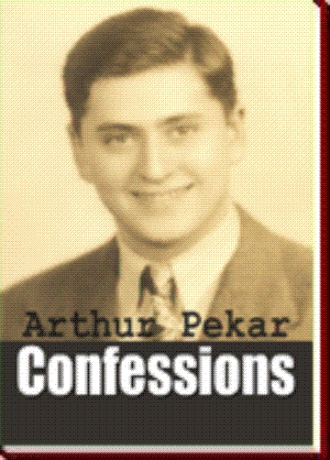
Book Cover & Preview Text
The Problem
Our first concert was a huge success. The management hired Flora to give a joint
vocal concert with me each weekend.
However, I discovered that there was a problem with Flora. She seemed to be very uncomfortable. After the concert, she went to her room, lay
down on her bed, and began writhing like a snake. She said to me, “Arthur, I feel itchy all over and only you can
help me.” I didn’t know what was wrong. “What should I do?” I asked. “You don’t know?” she asked
incredulously. “You really don’t know?”
she repeated.
We drove back to New York City on Monday
morning. That evening I received a
phone call from her, “If you want me to sing with you again, you must have sex
with me.” She used another four-letter
word. I never liked the sound of that
word.
Well, back to the drawing board. Of course, I took this up with Dr. Burns, my psychiatrist, on my next visit. “I thought that you would develop a natural sexual interest in Flora on the first evening without any prompting from me,” he said. His face looked fallen, but he felt up to the task of coaching me. He started with foreplay. He described things that I must do and he rolled his eyes with delight. I quickly ran to the bathroom and puked. With a sense of failure, he said to me, “You do not have to do anything. Just lay beside her and hope for the best.”
On the way to Tamiment for our second weekend I told
Flora that I would have sex with her after our concert. She was delighted and said, “Arthur, we have
this wonderful weekend together. It
would be foolish to waste any opportunity.”
I agreed. I didn’t tell her that
I was fearful about what may not happen, but something did happen. So why do I think that I am still a
celibate?
In the Beginning
It is called the “Gift of Celibacy.” Had I been born Catholic, I would have known
it was a gift from God. But I was born
Jewish. As I grew up, I began to
realize I had no interest in sex like other boys. I would be unable to marry and have a family like my neighborhood
friends. I foresaw a life of
loneliness. I became an alcoholic and
spent many years in therapy.
My story began before I was born with my mother, Ida
Pekar, in Russia. It is important to
understand the circumstances of my mother’s early life in order to appreciate
how they influenced me. My mother was
born in 1894 in the Russian city of Odessa on the northern coast of the Black
Sea. Ukraine was part of Russia then. There was a large Jewish community in
Odessa, and many of the streets had Old Testament names. Mother had a sister named Esther who was
eight years her senior.
My grandfather, Abram Kaplan, was in his late
twenties when my mother was born. He
was away from home at the time, serving as a bugler in the Russian army. He died when my mother was three months
old. The cause of his death was unknown
to me. He never saw his daughter.
When my mother was six, her mother became ill and
died. My mother told me how she sat
with her and held her hand as she passed away.
A kind Jewish baker in the neighborhood took my mother and her sister
into his home. The Russian word for
baker was Pekar. In later years, my
mother took this as her family name.
Two years later her sister married a young man named Boris Pruzhanski
who was nineteen at the time. It was
the custom to marry young in Russia in those days. Esther and Boris had four children.
My mother continued to live with the baker’s
family. In the mornings she looked out
the window and saw other children going to school. This made her cry because she was an orphan and couldn’t have a
life like other children. In Tsarist
Russia, education was not free.
Formats

Book Details
About the Book
In
his Confessions, Arthur Pekar describes his
life of Involuntary Celibacy. Sexual
desire is an important part of life because it is the means by which we can
express physical love and have satisfying relationships.
The
author wants others who feel “different” to benefit from his experiences. He could not fully participate in life either
as a heterosexual or homosexual because he lacked physical sexual desire. He resorted to alcohol and found God in the
process of his recovery from this addiction.
He now realizes that we are all perfect in God’s eyes and nothing can
change how He feels about us.
This
memoir will appeal to people of faith who believe that God can be an active
partner in their lives. The noted
Evangelical Christian preacher, Dr. Tony Campolo, has
written, “People who are asexual may have a special gift from God that enables
them to serve the Lord without the entanglements of this world.”
The
original intended title of this memoir was Walking With
God, but Arthur feels that he must share everything with his readers. In his walk with God, he stumbled many
times. Come and share his journey.
About the Author
Arthur Pekar was a high school teacher in
He earned the degree of Master of Divinity from a Protestant Evangelical seminary in 1978. He has preached as pulpit supply filling in for the regular church pastor.
He established a charity in
Singing opera was his passion and God-given gift. He performed tenor roles in community opera in
He currently resides in
I shall pass through this world but once.
Any good that I can do or any
kindness that I can show to any human
being, let me do it now.
Let me not defer or neglect it for I shall
not pass this way again.